
Gresham’s Art Department covers the whole spectrum of Art and Design. We offer A levels in Fine Art, Photography, Graphic Communication and Three-Dimensional Design.
The freedom within each of these routes allows pupils to produce work which blurs the boundaries between disciplines. The breadth of choice allows each pupil to explore areas of Art and Design which they have a particular interest in and also allows those moving on to a degree in this area to focus on the aspects of the design curriculum which will best prepare them for their chosen specialism.
As a STEAM (Science, Technology, Engineering, Arts and Mathematics) subject, our Art Department is now located in the Dyson building.
Pupils are taught the key technical skills to articulate ideas in the most sophisticated way possible while also encouraging a conceptual foundation to the process of making. The department continues to encourage ambition and risk taking and also gives pupils the opportunity to fully exploit the access to facilities within the department. We also generate opportunities for pupils to blur the lines between disciplines and reflect the fluid nature of contemporary Art and Design. This not only broadens the pupils skill set but also provides opportunities for entirely new ideas to emerge which keeps us all on our toes.
We pride ourselves on preparing pupils extremely well for the move onto degree level and in the last few years pupils have left us to continue their education at some of our countries best Art Schools. These include Glasgow School of Art, Central St Martins, The Slade and The Ruskin Drawing School.
GCSE pupils may choose two of the three courses offered here for options. Three Dimensional Design replaces DT as a GCSE in the School’s curriculum.
A level pupils who are focused on a future path within the creative industries can choose to study more than one creative A level. If you would like to study three from Art, Graphics, Three Dimensional Design and Photography, you will need to discuss this with the Deputy Head (Academic). We would also strongly recommend that all pupils choosing a creative A level should have GCSE experience in a creative subject.
- YEAR 9
In Year 9, pupils attend two creative arts lesson each week. Pupils are introduced to the broadest range of experiences possible in recording, making and critical analysis of contemporary practice in both Fine Art and Design. By the end of the course pupils will have a solid grounding of the fundamental building blocks inherent in the creative process. They will gain skills as diverse as painting, drawing, ceramics, sculpture, model-making, digital photographic manipulation and digital modelling.
In Years 10 and 11, pupils can choose to study a GCSE in Art, 3D Design or Graphic Communication. Due to their similarity, pupils are not able to choose all three options at GCSE, but can choose to take two as part of their options.
- GCSE FINE ART
Exam board: Edexcel
GCSE Fine Art provides pupils with the opportunity to explore a range of techniques, processes and materials. Recording through observational drawing and photography is central to the course. Pupils contextualise and inform their own art-making practice by studying work by both historical and contemporary Artists.
Pupils will learn to:
- Apply a creative approach to problem solving.
- Consider and develop original ideas from initiation to realisation.
- Analyse critically their own work and the work of others.
- Express individual thought and choices confidently.
- Take risks, experiment and refine their work.
There is an expectation for pupils to attend the Art GAP sessions each week in order
to develop their work and access the facilities.The course is an excellent preparation for Fine Art or Photography A Level and IB
Visual Arts.Assessment:
The Edexcel Fine Art GCSE consists of two internally assessed and externally
moderated components.- Component 1: Personal Portfolio (internally set) worth 60% of the qualification.
- Component 2: Externally Set Assignment worth 40% of the qualification, with a ten hour exam over two days.
- GCSE GRAPHIC COMMUNICATION
Exam board: OCR
The course introduces pupils to a visual way of conveying information, ideas and emotions, using a range of graphic media, processes, techniques and elements such as colour, icons, images, typography and photographs. Pupils should conduct primary and secondary investigations during their design development, and explore traditional and/or new technologies. The course will be built upon an ethos of risk taking and experimentation which is driven by an understanding of contemporary practice.
- GCSE THREE DIMENSIONAL DESIGN
Exam board: OCR
This course is concerned with the designing, prototyping, modelling or making of functional and aesthetic consumer products, interiors and architecture. Pupils should engage with appropriate processes, materials and construction techniques, using maquettes, models and working drawings to help take their initial ideas through to realisation. The course will be built upon an ethos of risk taking and experimentation which is driven by an understanding of contemporary practice.
Assessment:
Controlled assessment portfolio: 60%
Externally set assignment: 40%
- A LEVEL ART (FINE ART)
Entry requirements: Grade 6 in GCSE Art or equivalent.
Exam board: Edexcel
Pupils who are focused on a future career path within the creative industries can choose to study more than one creative A level subject. It is also highly recommended that all pupils choosing a creative arts A level should have GCSE experience in a creative subject.
Pupils who study this subject may progress to study an Art Foundation course or degree in Fine Arts, Sculpture, Graphics, Architecture, Textiles, Illustration, Animation, Photography or Film.
Pupils will develop integrated knowledge, skills and understanding of the following:Painting and drawing
- Characteristics of materials such as plasticity, opacity, translucence, malleability and transparency.
- Properties of colour, such as hue, tint, saturation, tone and colour perception.
- Materials such as graphite, wax crayon, oil pastel, soft pastel, charcoal, ink, chalk, watercolour, acrylic paint, oil paint, dyes, stitch and computer software.
- The potential for exploring combinations of materials, such as combining drawn and painted elements, collage, found objects, including inert materials to add textures/impart meaning.
Printmaking
- Print qualities and how they result from different printmaking tools, materials and processes.
- Printing processes such as screen printing, intaglio printing, relief printing and lithography.
Sculpture
- Producing forms in three dimensions, utilising volume, space, materials and movement.
- Modelling techniques such as the manipulation materials such as clay, plaster or wax.
- Construction techniques such as fixing or joining materials.
- Materials such as wood, plaster, leather, clay, textiles, card, plastics, wax, recyclable materials, ready-mades and found objects/materials.
Lens-based image making
- The production processes of artworks in a range of lens and time-based media, such as mixed media, installation, site-specific, montage, digital, film and video, animation and sound.
Assessment:
- The Coursework Unit is internally set, internally assessed and externally moderated. It is worth 60% of the total qualification. This includes a written Personal Study that comprises of 12% of the total qualification.
- The Exam Unit is externally set, internally assessed and externally moderated and is worth 40% of the total qualification. There is a fifteen-hour exam over three days.
- A LEVEL GRAPHIC COMMUNICATION
Entry requirements: Grade 6 in GCSE Art or equivalent. A level pupils who are focused on a future path within the creative industries can choose to study more than one creative A level. We would also strongly recommend that all pupils choosing a creative A level should have GCSE experience in a creative subject.
Exam board: Edexcel
Pupils who study this subject may move on to study Industrial Design, Art Foundation and a degree in Fine Arts, Graphics, Architecture, Illustration, Photography and Film.
Pupils will explore all aspects of graphic communication from the design of typography through to digital animation and everything else in between. They will develop key technical skills in the manipulation of image and colour as well as a broader understanding of contemporary approaches to visual communication. Pupils will not only be taught how to create impacting and inventive work, but also the importance of presentation in bringing this work to the audience.
Assessment:
- The coursework unit is a combination of preparatory work and sustained outcomes, and accounts for 60% of the total mark.
- The exam unit combines preparatory work and a final outcome produced during a timed period (15 hours) and, accounts for 40% of the total mark.
- A LEVEL PHOTOGRAPHY
Entry requirements: Grade 6 in GCSE Art or equivalent.
Pupils who are focused on a future path within the creative industries can choose to study more than one creative A level. It is also highly recommended that all pupils choosing a creative A level should have GCSE experience in a creative subject.
Pupils who study this subject may progress to study an Art Foundation course, or a degree in Photography, Film, Fine Art, Graphics, Architecture or Illustration.
Pupils will develop integrated knowledge, skills and understanding of the following:
Film-based photography- Specialised films which will facilitate the processes of generating and developing ideas.
- Viewpoint, composition, focus, aperture, shutter speed, exposure, through the lens metering.
- Darkroom techniques, using appropriate paper types, developing and printing, emulsions, exposures, tone and contrast.
- Techniques such as chemigrams, cyanotypes, photograms, photomontage.
- Manipulation of the image through computers, scanners and computer software.
Digital photography
- The principles of digital photography, including the pixel and digital processing.
- Viewpoint, white balance, composition, focus, aperture, shutter speed, exposure, shooting modes, histograms.
- The use and qualities of image acquisition hardware and software, image manipulation and analogies between digital and other forms of photography.
- The relationships between colour and tone for screen and print-based media, screen calibration, colour gamut, file formats such as raw, jpeg, tiff.
- The use of a range of source material, software and hardware in the generation and development of ideas.
Film and video
- Camera angles, viewpoints, length of shot, cutting, composition, cropping and pacing, which may include computer generated ideas.
- Various animation processes, such as stop-frame.
- Qualities and functions of various film and video formats, such as 8mm film, analogue video, digital video, animated gif.
- The use of sound, narration and storyline and their relation to moving images.
- Editing
The studio facilities allow pupils to combine photographic techniques with other processes such as laser cutting, silk screen printing, heat transfer and sublimation printing.
Assessment:
- The Coursework Unit is internally set, internally assessed, and externally moderated. It is worth 60% of the total qualification. This includes a written Personal Study that comprises of 12% of the total qualification.
- The Exam Unit is externally set, internally assessed, and externally moderated and is worth 40% of the total qualification. There is a fifteen-hour exam over three days.
- A LEVEL THREE DIMENSIONAL DESIGN
Entry requirements: Grade 6 in GCSE Art or equivalent. A level pupils who are focused on a future path within the creative industries can choose to study more than one creative A level. We would also strongly recommend that all pupils choosing a creative A level should have GCSE experience in a creative subject.
Exam board: Edexcel
Pupils who study this subject may move on to study Industrial Design, Art Foundation and a Degree in Fine Arts, Graphics, Architecture, Illustration, Photography and Film.
Pupils will study the techniques used within contemporary design to generate ideas and then bring these ideas to fruition as fully functioning objects. They will develop skills across a wide range of 2D and 3D processes and also reflect on the work of other practitioners within the realm of contemporary design. Projects are designed to encourage innovation and a risk-taking approach to the subject where playing with ideas becomes a natural part of the design process.
Assessment:
- The coursework is a combination of preparatory work and sustained outcomes, and accounts for 60% of the final mark.
- The exam unit combines preparatory work and a final outcome produced during a timed period (15 hours), and accounts for 40% of the total mark.
- IB VISUAL ARTS
Entry requirements: Grade 6 in GCSE Art or equivalent
Pupils who study this subject may progress to study an Art Foundation course or a degree in Fine Art, Graphics, Architecture, Sculpture, Graphics, Textiles, Illustration, Animation, Photography or Film.
The curriculum revolves around three main aspects of art practice: theoretical practice, art-making practice and curatorial practice. An IB Visual Arts pupil is all of these: a critic, a maker and a curator:
Theoretical practice (the critic)
Using investigative strategies, critical thinking, comparative analysis and reflection, pupils will examine various art forms and artists from different times, places and cultures. They will investigate different techniques and processes, enquiring into their contextual evolution. They will explore ways of communicating knowledge in both visual and written forms.Art-making practice (the maker)
Through exploration and experimentation pupils will discover and apply a variety of artistic techniques. They will develop their own concepts throughout this explorative process and, with reflection and self-evaluation, produce a considered body of work.Curatorial practice (the curator)
Through careful, informed viewing of artworks and exhibitions pupils will develop an ability to formulate their own considered response. They will begin to articulate your intentions for developing and displaying their own work. They will also consider the relationship between artist and audience and what it means to exhibit work; learn to select and present their own work effectively; and articulate intentions and the connections between their artworks.Assessment:
Part 1 The Comparative Study for points 20% Externally Assessed
Compare and contrast the work of (at least two) different artists from different cultural contexts (Higher Level pupils will also include a reflection of how this relates to their own work)
Standard Level: 10-15 screens.
Higher Level: 10-15 screens & 3-5 screens comparing own work.Part 2 Process Portfolio for points 40% Externally Assessed
The pupils journey of art‐making: their engagement with different media and techniques, documentation of process, reflections on artists & artworks and the development of ideas.
Standard Level: 9‐18 pages/screens submitted.
Higher Level: 13‐25 pages/screens submitted.Part 3 The Exhibition with a Curatorial Rationale for points 40% Internally Assessed by Teacher
Pupils reflect on their chosen body of work and provide a rationale for the decisions regarding the selection of certain pieces for exhibition.
Standard Level: 4‐7 artworks, exhibition text and a curatorial rationale of max 400 words.
Higher Level: 8-11 artworks, exhibition text & curatorial rationale max 700 words.
ALUMNI
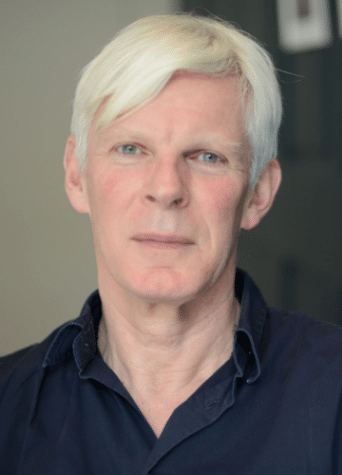
WILLIAM CAREY
PHOTOGRAPHER
HOWSON’S 1974-1979
William is a photographer, specialising in sport, particularly equestrian in recent years. When he left Gresham’s to travel he hoped to become a photojournalist; however, after joining the armed forces and holding a short service commission in The Blues and Royals, his career took him into the financial services industry culminating in him co-founding Liontrust Asset Management PLC in 1995. Since 2005 he has been fortunate enough to work creatively, first as a stone sculptor before concentrating on photography full time. He now works at events across the UK and Europe.