

Drama and the Performing Arts promote self-confidence; co-operation and inventiveness encouraging and supporting everyone to explore and appreciate their own ideas and creative freedom of expression.
Drama is part of the Year 9 curriculum, and is a popular option at GCSE, with further opportunities to continue into the Sixth Form. Throughout the department, the emphasis is on encouraging a high level of independence.
Drama pupils are encouraged to be active participants in the creative process, find their place within a team, take risks, dare to fail, practically realise their own ideas and recognise the achievements and creativity of others.
Theatre trips, digital theatre, workshops and the opportunities to talk and work alongside theatre professionals are crucial elements in the teaching and learning of theatre, which as a living art form is constantly changing. The trends and fashions of current practitioners form the basis of much of our Sixth Form work, which then influences younger pupils, keeping the work fresh and innovative across the age range.
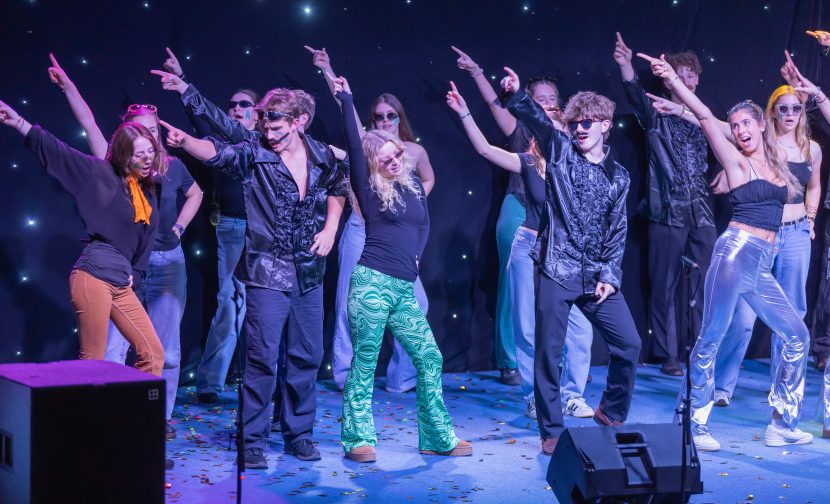
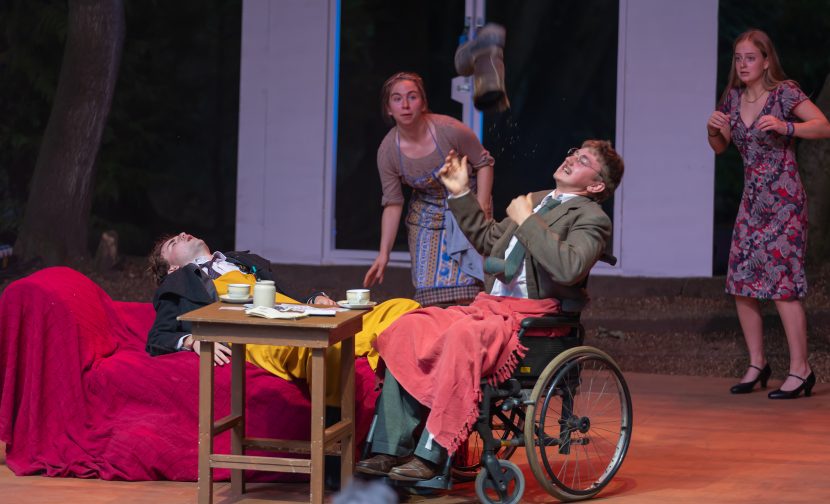
Pupils have many opportunities to participate in our school productions each year and to produce their own work. They have the chance to take centre stage and perform as a principal or become a committed member of the ensemble in a musical. They can also join the backstage crew or technical team — something that is seen by many as an essential part of the Gresham’s experience. Find out more about co-curricular drama here.
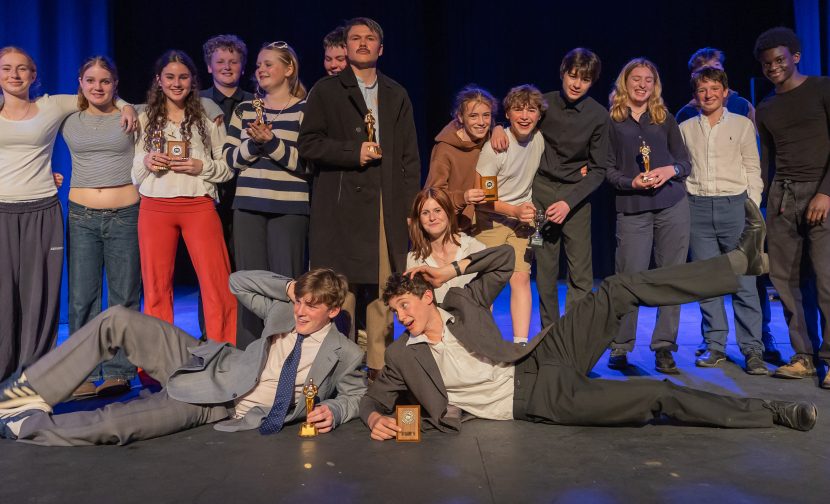
Participation in co-curricular Drama is very popular, with large casts and crews signing up for the productions and pupils making the most of the opportunities offered. As influential theatre practitioner Bertolt Brecht famously said, theatre “Is work, not magic, my friend” but the rewards are undeniable, and though we work hard in rehearsal, we play hard too, creating original work and staging a range of plays and large-scale musicals.
Our pupils take responsibility for every aspect of production from the hospitality of our Front of House stewards to the unsung heroes of our production teams specialising in design, technical and stage management who, under the supervision of our professional technical team, gain the confidence and skills to produce the set and props, help with costume and make-up, operate the lighting and projections and run sound or work in the wings as crew. This adds an extra artistic and cultural dimension to their term time experience and is where lifelong friendships and an appreciation of the live experience is forged.
The Auden Theatre is a professional and versatile venue used for our own productions, as well as a recognised mid-scale receiving house. Alongside our beautiful Theatre in the Woods, it serves as a key location for summer theatre, comedy nights, jazz performances, and other events.
Former pupils from the last ten years are currently studying at the Central School of Speech and Drama, RADA, LAMDA, Arts Ed, Mountview and the Universities of Durham, York and the UEA. From the extraordinary, high-profile career of award-winning actress Olivia Colman, to the innovative successes of Curious Directive, led by Greshamian director Jack Lowe, Greshamians are actively making their mark. They are telling stories and getting their voices heard as actors on stage and in film, as producers and playwrights, and as technicians, stage managers, and designers.
- YEAR 9
Pupils in year have a lesson a week during which they are introduced to Drama skills and a toolkit of techniques and approaches for creating their own performances. They explore the varying roles in theatre from actor to designer and technician. This establishes a foundation of skills and techniques on which to draw from as they begin to create and evaluate their own work. Pupils learn how an actor prepares for a role, experimenting with different character types and performance styles, as well as learning the skills of a designer by creating their own set, costume, sound and lighting designs. Pupils begin to build knowledge of subject specific vocabulary giving them a shared language when creating their own work and evaluating performances. They are given the opportunity to work independently within a given framework to encourage good studio practice, as well as developing key teamwork skills through group work. Pupils’ freedom of expression will be encouraged as well as positive critical appreciation of their own strengths and weaknesses as a student of drama. Furthermore, they will also develop the ability to recognise what makes an effective piece of theatre for an audience. At the end of the year they will put the skills learned into dramatic practice as they create their own production for a live audience.
- GCSE DRAMA
Exam board: AQA
GCSE Drama is a lively and creative course designed to balance the practical and academic study of Drama. Pupils work together to understand and experience for themselves the roles and responsibilities of a theatre company. Working as part of a creative team of actors, directors, designers and technicians, pupils build confidence and develop skills in communication, cooperation and performance. The course enables pupils to work imaginatively, developing their understanding of how to create thought-provoking and well-made theatre, and performing play texts to a live audience. In addition to acting and directing, pupils will be encouraged to consider a range of design and technical skills including stage lighting, sound design, set design, stage management, make-up, costume and puppet design.
The course is an excellent preparation for BTEC Performing Arts or IB Theatre and provides an excellent foundation in creative, practical performance and production skills. With the focus on working imaginatively, collaborating creatively and communicating effectively, GCSE Drama provides a solid foundation for further studies in Drama and Theatre with a skills set that opens up many vocational opportunities.
The course is divided into three components, which includes the study of a set text, audience experience of live theatre, devising original work and scripted performance.Component 1: Understanding Drama Written Exam, 1 hour 45 minutes, 40%
The written exam is a response to:
Set Text Study – exploring a set play text as actor, director, designer and technician. This requires pupils to understand the challenges of, and communicate their own ideas for, staging a play as a member of a production company.
Live Theatre – pupils watch and respond to the work of others, writing analytical responses to live theatre as a member of the audience.
Component 2: Devising Drama Devising Log & Devised Performance, 40%
Pupils explore a range of theatre skills including acting, set and costume, lighting and sound design. Working in small groups they specialise to produce an original piece of theatre from a given starting point, recording the process in a Devising Log.
Component 3: Texts in Practice. Performance (2 extracts) to examiner, 20%
In Year 11, pupils work on a play text of their choice and specialise as: an actor, set, costume, lighting or sound designer to present a polished performance to an external examiner.
- BTEC PERFORMING ARTS
Entry requirements: There are no specific requirements for this course, though GCSE Drama is a useful starting point. In the absence of Drama qualifications, we would expect pupils to have some performance experience and extracurricular engagement within the Performing Arts. This is a practical course which requires a professional attitude and a commitment to get actively involved.
Future Employment: Pupils completing their BTEC in Performing Arts will be aiming to go on to employment in the industry or related industries, often via the stepping stone of Drama and Theatre at university, or Performing Arts/Dance/Drama School, becoming a member of a Theatre/Performing Arts group, dancer/director in film, television or media, Drama teacher or workshop facilitator.
The Extended Certificate equivalent one A level
The course is made up of:
3 Mandatory Units (83% of the course), 2 of which are externally assessed (58% of the course) and 1 Specialist Unit to give you a strong foundation and to allow for a pupil’s personal interest and skills to develop their personal pathway.
MANDATORY UNITS
- Investigating Practitioners’ Work (externally assessed)
- Developing Skills and Techniques for Live Performance
- Group Performance Workshop (externally assessed)
The Specialist Unit will reflect the skills and interests of the cohort. Options include:
Unit 18: Interpreting Classical Text for Performance
Unit 19: Acting Styles
Unit 20: Developing the Voice for Performance
Unit 21: Improvisation
Unit 22: Movement in Performance
Unit 27: Musical Theatre Techniques
Unit 28: Variety Performance
There are three main forms of assessment: external, internal and synoptic.
Externally assessed units:
- Examinations – all pupils take the same assessment at the same time, normally with a written outcome.
- Set tasks – pupils take the assessment during a defined window and demonstrate understanding through completion of a vocational task.
Internally assessed unit:
- Write up the findings of personal research.
- Use case studies to explore complex or unfamiliar situations.
- Deliver presentations.
- Construct portfolios to demonstrate practical skills.
ALUMNI
ALUMNI
Sebastian Shaw
Kenwyn 1919 – 1922
Sebastian Lewis Shaw (29 May 1905 – 23 December 1994) was an English actor, theatre director, novelist, playwright and poet. During his 65-year career, he appeared in dozens of stage performances and more than 40 film and television productions. Shaw made his acting debut at age eight at a London theatre. He studied acting at Gresham’s and the Royal Academy of Dramatic Art. Although he worked primarily on the London stage, he made his Broadway debut in 1929. Shaw was particularly known for his performances in productions of Shakespeare plays, which were considered daring and ahead of their time. In 1966, he joined the Royal Shakespeare Company, where he remained for a decade and delivered some of his most acclaimed performances.
In 1983, he appeared in the third instalment of the original Star Wars Trilogy, Return of the Jedi, starring as the redeemed Anakin Skywalker, as well as Skywalker’s ghost in the original 1983 theatrical release of the film.
Sienna Guillory
Oakeley 1991 – 1993
Actress – starred in Luther.
Miranda Raison
Edinburgh 1990 – 1991
Actress – starred in Night flyers/ Dr Who.